Types Of Inverters
News
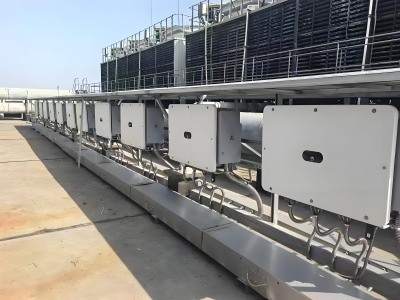
Small and Medium Power Inverters: Small and medium power inverters are a crucial component of residential independent AC photovoltaic (PV) systems. Their reliability and efficiency are vital for promoting PV systems, effectively utilizing energy, and reducing system costs. Therefore, PV experts worldwide have been striving to develop inverters suitable for residential applications to promote the industry's faster and better development.
Series-Type Inverters: Series-type inverters offer numerous advantages for electric vehicles. The series structure significantly increases the variety of output voltage vectors, enhancing control flexibility and accuracy; it also reduces fluctuations in the motor's neutral point voltage. The inverter's bypass feature improves the flexibility of charging and regenerative braking control.
With increasing concern for the urban environment, electric vehicles have received a rare opportunity for development. In urban transportation, electric buses, due to their large carrying capacity and high overall efficiency, have become a priority for development. Electric buses mostly use three-phase AC motors. Due to the high motor power, the components in the three-phase inverter need to withstand high voltage and high current stress. The high dv/dt also results in significant electromagnetic radiation and requires excellent heat dissipation.
High-power inverters employing a multi-series series structure reduce the voltage stress on individual components, lowering the requirements for these components; they also reduce the dv/dt value, decreasing electromagnetic radiation and significantly reducing component heat generation; and the increased variety of output levels improves control performance.
Multi-series series inverters are suitable for high-power electric vehicle drive systems. The multi-series structure reduces the hazards associated with multiple batteries connected in series, lowers switching stress on components, and reduces electromagnetic radiation. However, it doubles the number of batteries required.
The multi-series structure significantly increases the variety of output voltage vectors, enhancing control flexibility and accuracy; it also reduces fluctuations in the motor neutral point voltage. To maintain balanced charge across each battery group, consistent battery discharge times are necessary during operation. Bypassing allows for flexible charging of the battery pack and control of regenerative braking torque.
 Send Email
 Joyful Power
 19822673336